
Rio Tinto and Rondo Energy have begun engineering and design work for a proposed 360 MWh industrial heat battery at Rio Tinto’s Yarwun alumina refinery in Queensland, Australia.
Announced on 20 October 2026, the project aims to investigate the potential for large-scale thermal energy storage to provide continuous industrial process heat while reducing reliance on fossil fuels.
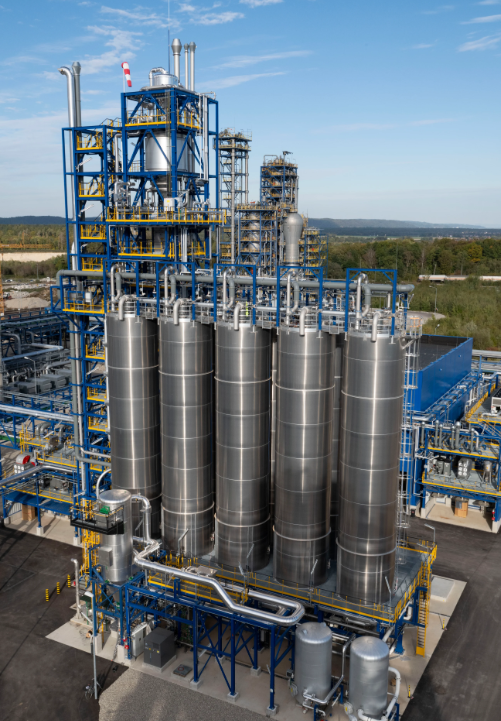
The proposed installation, located near Gladstone, would have 360 MWh of thermal energy storage capacity and a heat discharge capacity of 30 MW.
The project is supported by the Australian Renewable Energy Agency (ARENA), which has committed initial funding for front-end engineering and design work.
Investigating Thermal Energy Storage for Alumina Refining
Industrial process heat remains a significant challenge for energy-intensive manufacturing sectors, particularly those requiring continuous high-temperature steam.
Rondo’s Heat Battery technology stores electricity as thermal energy in refractory bricks, which can then be used to generate steam or hot air for industrial processes.
The system is designed to use lower-cost electricity during charging periods and deliver a continuous supply of heat to manufacturing operations.
At Yarwun, the proposed installation would be assessed as a potential alternative to fossil fuel-based steam generation for part of the refinery’s operations.
The engineering study will examine the technical and economic viability of integrating the heat battery into the site’s existing infrastructure.
According to Rondo Energy, the technology has applications across several energy-intensive manufacturing industries, including alumina refining, cement production, and chemicals.
Government Funding to Support Project Development
ARENA will provide an initial A$3.6 million to support front-end engineering and design activities.
Subject to successful completion of the study, the agency has committed up to A$38 million in further funding to support deployment.
An additional A$33.3 million in conditional contingency funding has also been approved, which would be made available only under defined circumstances, including specified project cost and electricity price risks.
The funding structure is intended to support the project’s development while allowing the companies to assess its technical feasibility and commercial performance before proceeding.
Supporting Industrial Emissions Reduction
Rio Tinto says the project could help address the challenge of reducing emissions associated with the high-pressure steam required for alumina refining.
The company’s Pacific Operations Managing Director, Armando Torres, said the study would assess whether thermal energy storage could provide a technically and economically viable alternative to fossil fuels for part of Yarwun’s steam requirements.
ARENA estimates that a completed installation could reduce on-site carbon dioxide emissions by approximately 67,000 tonnes annually.
If progressed, the project would represent one of the first large-scale demonstrations of thermal energy storage for industrial process heat globally and a first for the alumina industry.
The development could also provide useful operational evidence for other manufacturers investigating electrification and thermal energy storage as part of their emissions reduction strategies.
The project remains at the engineering and design stage, with construction and deployment dependent on the outcome of the study and subsequent project decisions.